8 Recruitment trends shaping talent acquisition in 2026
Estimated read time: 9 minutes | Last updated: September 2026
Recruitment trends in 2026 point to tighter budgets, scarcer technical talent, and candidates who research employers as carefully as employers screen them. Application volumes per opening have risen sharply since 2022, and most employers expect skill gaps to be their biggest hiring obstacle in 2026. The eight shifts below are the ones most likely to affect how technical recruiters and talent acquisition leaders source, assess, and close candidates this year.
This article is written for recruiters and TA leaders hiring technical roles, and focuses on the talent acquisition trends most likely to change day-to-day work. Where sections touch L&D or CHRO concerns, they are framed around what recruiters can act on.
1. Skills-based hiring becomes the default screen
Skills-based hiring has moved from experiment to standard practice in 2026 and is the trend reshaping technical recruitment fastest. Among employers participating in NACE's Job Outlook 2026 survey, 70% report using skill-based hiring, up from 65% last year, and 71% use this approach at least half of the time. The stages where employers apply skills-based hiring most often are interviewing (87%) and screening (65%) — and screening has partly supplanted GPA: in 2019, 73% of employers screened candidates by GPA; this year, just 42% do.
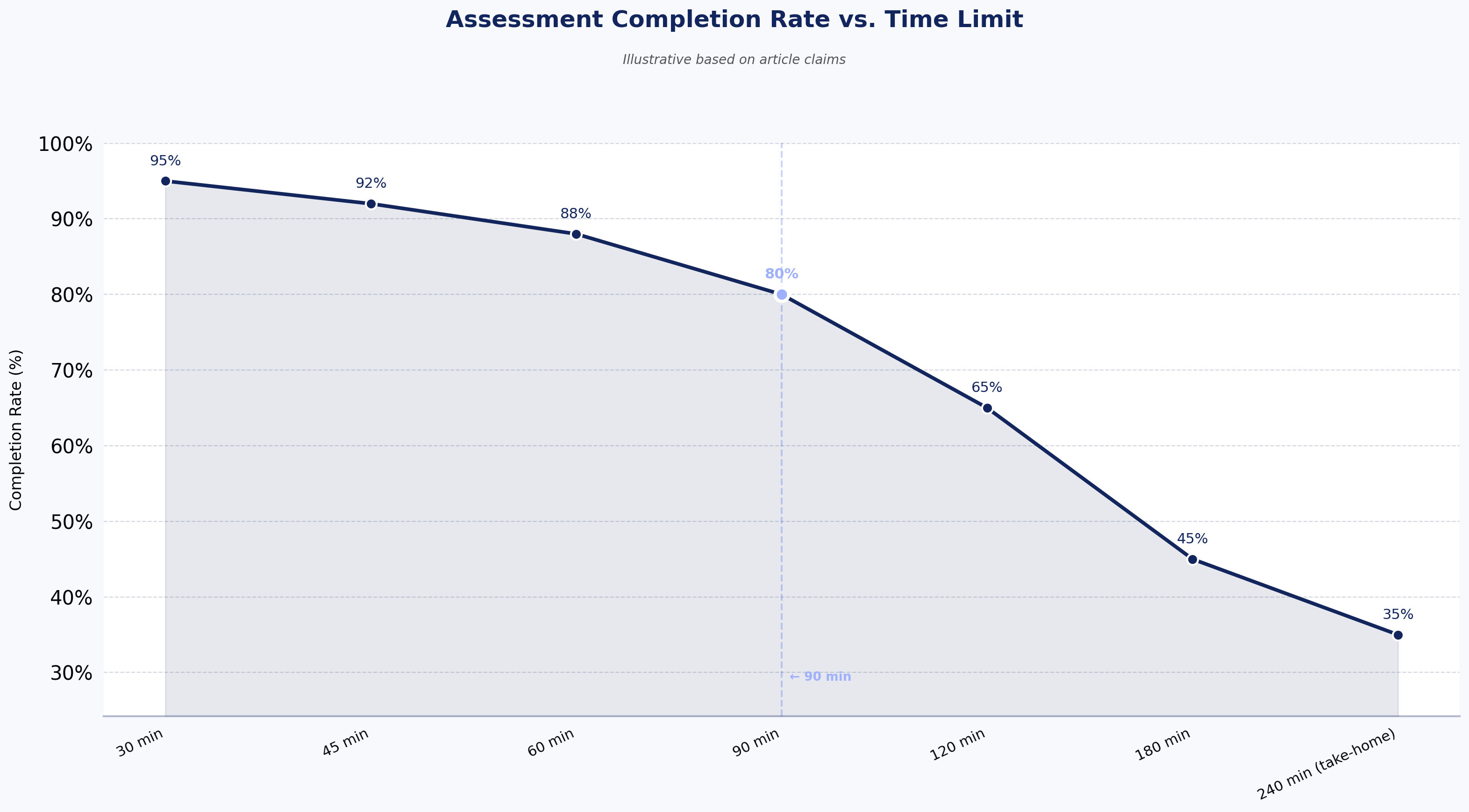
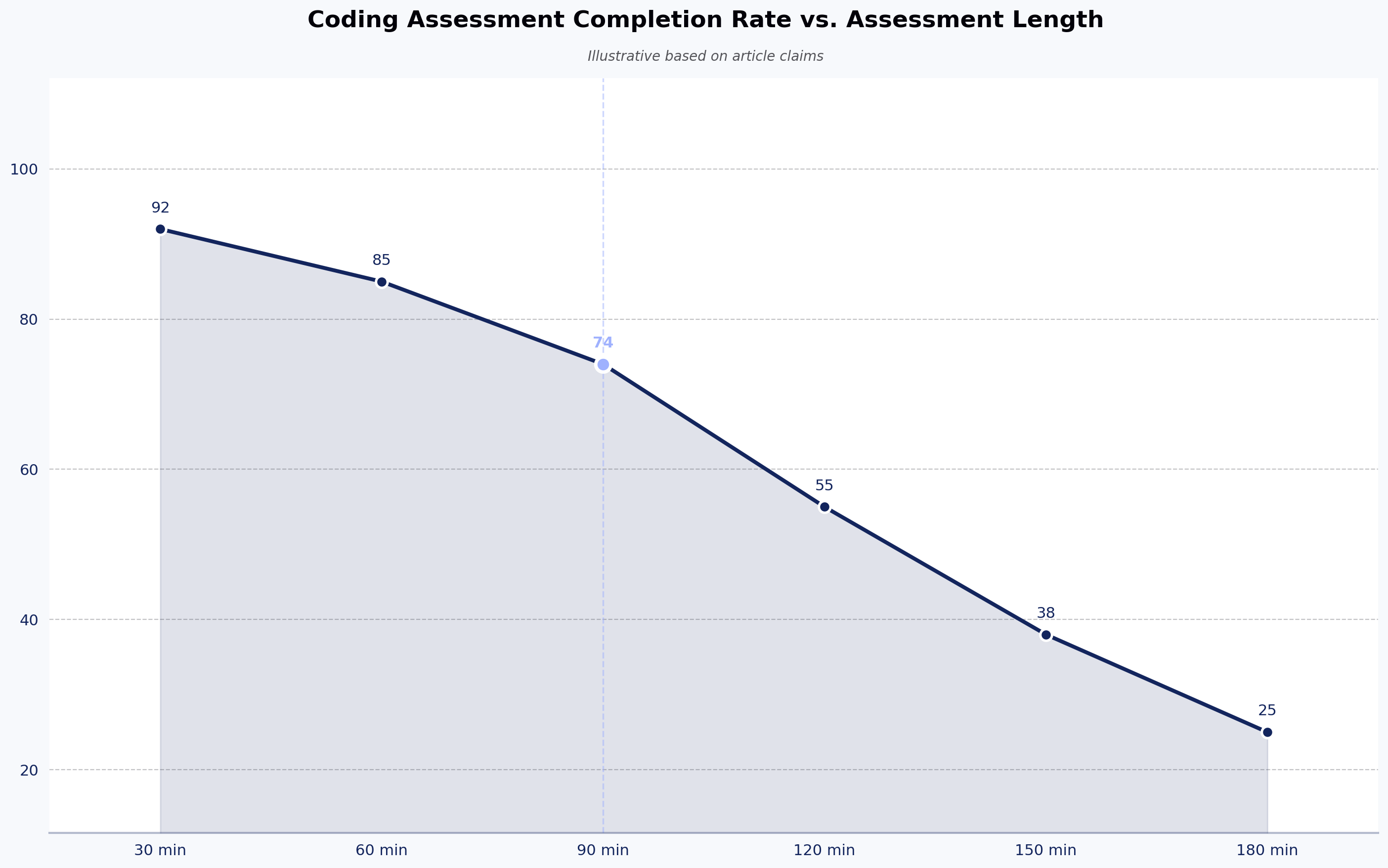
For technical roles, the operational implication is straightforward: insert a validated skills assessment before the engineering interview loop. 36% of companies have open positions they cannot fill, with skills being the primary obstacle, and 50% of employers cite lack of relevant experience as the primary hiring obstacle — resume screening alone does not solve either. Skills-first evaluation also broadens the funnel: a skills-based approach would expand the talent pool 24% more for women than for men in roles where women are underrepresented, according to the LinkedIn Economic Graph.
Explore HackerEarth's approach to skills-based hiring for the technical funnel.
2. AI in hiring: where it delivers, where it doesn't
AI use across talent acquisition is now operational rather than experimental, but the results are uneven. The majority of companies now use AI somewhere in recruitment — across sourcing, screening, scheduling, and candidate communication — with vendors reporting time-to-hire and cost-per-hire reductions in the 20–40% range for well-scoped deployments. At the same time, Gartner's October 2025 survey found 88% of HR leaders say their organizations have not yet realized significant business value from AI tools — having tools and using them well are different things.
Where AI reliably helps:
- Sourcing and shortlisting. Pattern-matching narrows thousands of profiles to a manageable list faster than manual review. Watch for over-indexing on pedigree signals that reflect historical hiring bias.
- Screening consistency. AI-assisted scoring applies rubrics more uniformly than ad-hoc human review — but uniformity is not fairness. A ResumeBuilder survey found 47% of companies identify age bias, 44% cite socioeconomic bias, and 30% report gender bias in their AI tools, and SHRM research shows 19% of organizations said their tools overlooked or screened out qualified applicants.
- Assessment for technical roles. Skills-based assessments that test actual coding ability against role-specific rubrics give a more direct signal than resume parsing.
Where AI underperforms: predictive tenure and performance modelling. Most companies do not have enough clean, longitudinal hiring data for models to generalise beyond the last cycle, and predictions about tenure are sensitive to macro conditions the model cannot see.
Regulatory context. The EU AI Act (Regulation (EU) 2024/1689) classifies AI systems used to recruit, screen, evaluate, allocate work to, or monitor performance of EU workers as high-risk under Annex III item 4. Under the Digital Omnibus (Regulation (EU) 2026/1744), standalone Annex III high-risk obligations were deferred from 2 August 2026 to 2 December 2027, giving recruiters more runway — but the substantive requirements around transparency, human oversight, and bias testing are unchanged. Any algorithmic candidate ranking, CV filtering or interview scoring must be transparent, supervised by trained humans and tested for bias — with fines for high-risk system violations up to €15 million or 3% of global annual turnover (the higher €35 million / 7% ceiling applies only to prohibited AI practices under Article 5), and non-EU recruiters hiring into the EU are fully in scope. NYC Local Law 144 has required bias audits and candidate notice since July 2023. Document how models are trained, pressure-test vendor bias claims, and preserve human review for adverse decisions.
3. DEI shifts from initiative to operating model
Diversity is increasingly treated as an operating assumption rather than a standalone program in 2026. For recruiters, this manifests as sourcing reach: building teams that mirror the customer base requires sourcing across geographies, communities, and pipeline programs (HBCU pipelines, returnship programs, regional hiring hubs) rather than top-level commitments alone. Skills-first screening reinforces the shift — TestGorilla's 2024 State of Skills-Based Hiring report found 84% of employers feel skills-based hiring has a positive effect on workforce diversity.
The limitation worth naming: demographic diversity and employment-type diversity (blending full-time employees, contractors, and freelancers) are different conversations. Both matter, but they require different operational responses, and heavy reliance on freelancers can fragment institutional knowledge in ways that offset flexibility gains.
4. Employee Value Proposition becomes a screening artifact
Employer branding — specifically, a named Employee Value Proposition (EVP) — is now a lever candidates apply to employers, not the other way around. Recruiters increasingly field questions about flexibility, mental health support, learning budgets, and team norms in early-stage conversations, not just at the offer stage. A large share of employees are open to leaving their current role, which means EVP claims are being tested by an active, comparison-shopping candidate market.
According to Amy Bush, President of Sevenstep, in comments to HR Executive, employer brand credibility now hinges on demonstrable evidence: candidates are skeptical of corporate messaging and expect claims on diversity, sustainability, or well-being to be backed by specifics.
Practical ways to make EVP legible to candidates:
- Publish specific stories from employees — a recent hackathon, an internal move, a learning week — rather than generic praise.
- Tie PR coverage to concrete initiatives: open-source contributions, accessibility work, measurable DEI outcomes.
- Publish leadership interviews that include real strategy and tradeoffs, not vision platitudes.
EVP messaging only works if it matches employee experience. Glassdoor and Blind will surface the gap quickly.
5. Internal mobility as a sourcing channel
Internal mobility is now treated as a sourcing channel with its own funnel metrics, not an HR side program. With external hiring more expensive and slower — the average cost per hire in the U.S. is approximately $5,475 for non-executive roles, with a time to fill of about 44 days, according to SHRM's 2025 Talent Access Report — filling open roles from existing employees is competitive.
Research on internal versus external hiring, including Matthew Bidwell's 2011 study in Administrative Science Quarterly ("Paying More to Get Less"), has found internal hires tend to reach productivity faster and show stronger retention than external hires, though effect sizes vary by role.
Internal mobility fails when managers hoard talent or when there is no skills visibility across the organization. Skills intelligence platforms that map current employee skills against open roles turn a policy on paper into one that actually moves people. As Danny Gutknecht, CEO of Pathways.io, has argued, the shift that works is treating learning budgets as a retention metric rather than a perk — when employees can see how a skill ties to the next internal role, voluntary churn drops.
6. Social sourcing and recruitment marketing mature
Social platforms — LinkedIn in particular — are the primary sourcing channel for most technical recruiters in 2026, not a supplemental one. Response rates on cold InMails remain low, and senior or niche candidates are saturated with outreach, so recruiters who treat social as one channel among several — layered with referrals and specialised pipelines — see better results than those relying on volume.
Practical tactics that lift response rates: build a shortlist of 20–30 ideal profiles for the role, engage thoughtfully with their technical content for a week before reaching out, and send a tailored InMail with specifics on tech stack, team size, on-call expectations, and compensation band. Recruiters who consistently warm the outreach see meaningfully higher response rates than those leading with a cold first-touch.
For deeper guidance on the technical side, see our guide to technical interviews and AI hiring tools for tech recruiting.
7. Recruitment automation focused where volume justifies it
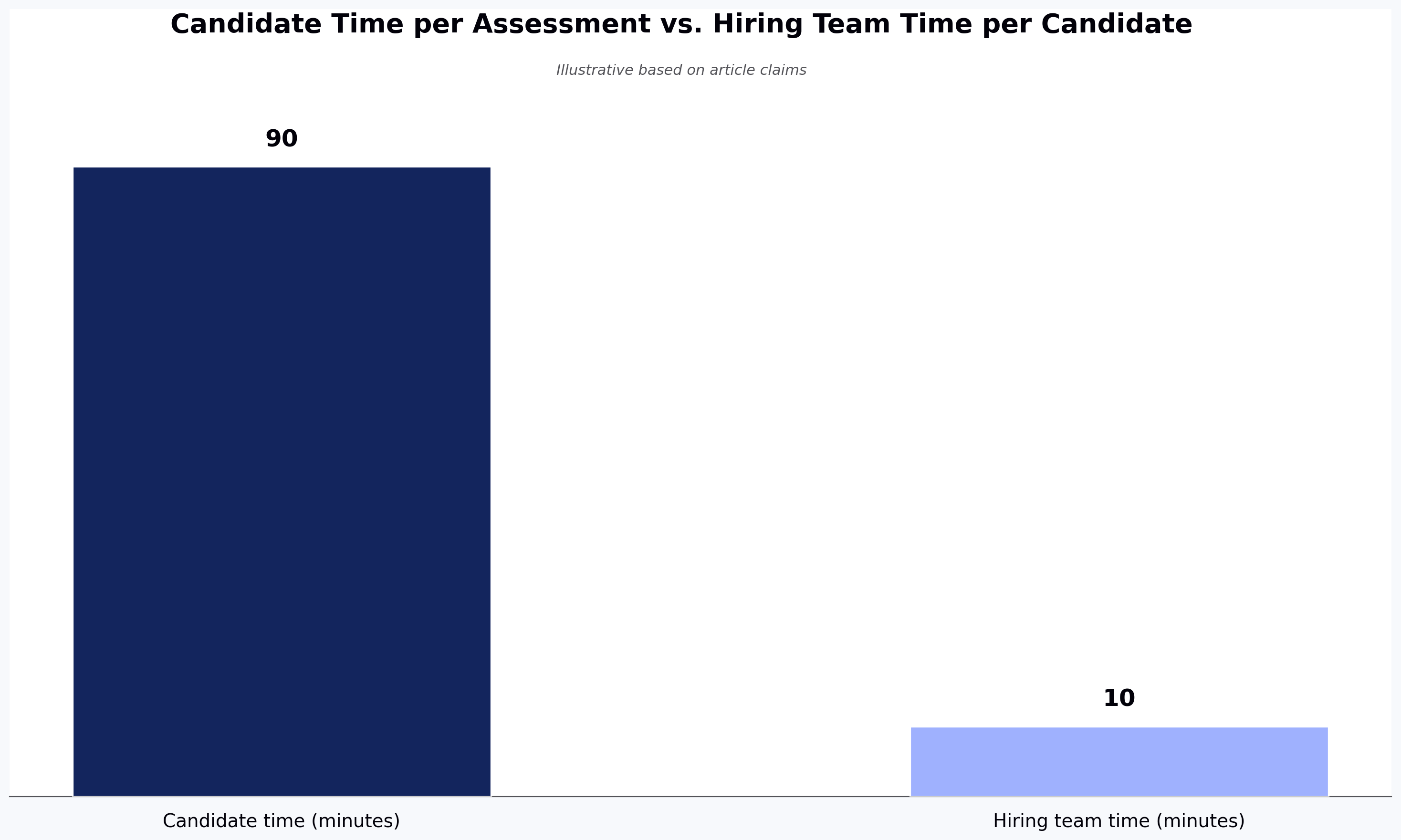
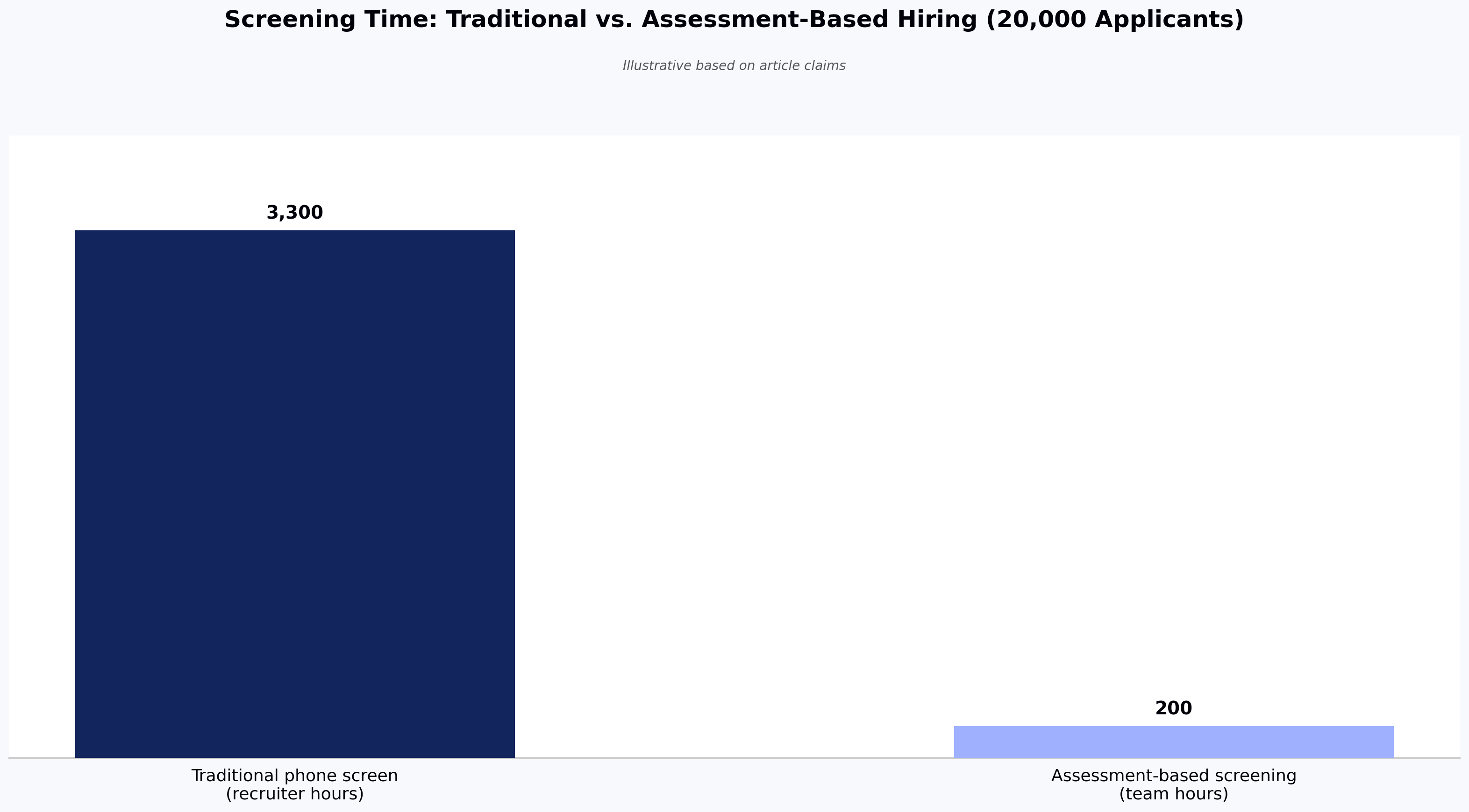
Automation continues to expand across hiring workflows in 2026, but the value depends sharply on role type. A useful heuristic: automate screening where applicant volume exceeds recruiter capacity to review manually, and preserve human review for roles with fewer than ~50 applicants per opening.
A typical automated workflow for a high-volume junior role: job posting goes live → candidate applies → automated email invites them to an online assessment → candidate completes the test → qualifying candidates are routed to interviews. The same steps apply for senior roles, but screening, calibration, and outreach carry more human judgment. The trade-off to watch: over-automation filters out strong non-traditional candidates whose resumes don't match keyword expectations — a growing risk as skills-based hiring expands the pool of qualified non-linear applicants.
For a broader view, see our guide on future-proofing your recruitment strategies.
8. Predictive analytics for pipeline forecasting
Predictive analytics is playing a larger role in 2026 for skills auditing and pipeline forecasting, with the data foundation — not the algorithm — as the limiting factor. The same techniques used to predict customer churn can be applied to employee data — survey responses, 1:1 cadences, productivity signals — to anticipate retention risks and skill gaps.
As Dr. Soudip Roy Chowdhary, CEO of Eugenie.ai, has noted, workforce data such as employee surveys, 1:1 meetings, and sprint burn-down charts can help managers re-engage with employees before skills become outdated.
Questions predictive analytics can help recruiters and TA leaders answer:
- Which sourcing channels produce the highest-quality hires?
- What is the time from application to offer, and where are the bottlenecks?
- Which roles are likely to open in the next 6–12 months?
- Which skills are urgently needed to meet business goals?
A common blocker: workforce data sits in silos — performance, learning, hiring, and skills inventories rarely connect. Predictions are only as good as the input data; thin or biased historical data produces thin or biased forecasts.
Frequently asked questions about recruitment trends
What are the 5 C's of recruitment? The 5 C's — commonly cited as Candidate, Capability, Cost, Compliance, and Culture — are a framing device for recruiting scorecards. They are useful as a checklist but should not be confused with a measurement framework: none of the 5 C's specify how to weight tradeoffs when, for example, a strong-capability candidate raises compliance risk under new AI hiring rules. Treat them as prompts for a scoring rubric rather than as the rubric itself.
Why is Gen Z reportedly harder to hire? The framing itself is often wrong. 65% of Gen Z applicants are more likely to consider employers that emphasize skills and abilities, rather than degree attainment — meaning many "Gen Z won't apply" problems are actually job description problems (degree requirements, vague EVP, no salary bands) rather than generational ones. The candidate cohort that responds worst to bad job posts happens to skew young.
How is AI changing talent acquisition where vendors don't advertise? The area where AI underperforms most is the one vendors pitch hardest: predictive tenure and performance modelling. Most companies do not have enough clean, longitudinal hiring data for a model to generalise beyond the last cycle. AI is most reliably useful at the top of the funnel (shortlist compression, consistent screening rubrics) and least reliable at the bottom (predicting who will still be here in three years).
Which recruitment trend should I prioritize first? Priority depends on where the funnel is weakest. If quality-of-hire is the issue, audit screening and assessment first. If cost-per-hire is climbing, look at sourcing channels and internal mobility. If 12-month retention is dropping, the problem is more likely upstream in role definition or downstream in onboarding than in sourcing. Let the funnel diagnosis drive priority, not vendor framing.
How do I reduce time-to-fill for technical roles? The most common mistake is treating time-to-fill as a single metric to compress. Faster loops that skip candidate-experience touchpoints (structured feedback, transparent stage timing) win the week but lose offer acceptance rates a month later. Diagnose which stage is actually slow — SHRM benchmarks put average time to fill around 44 days, but most of the drag is concentrated in scheduling gaps between stages, not in the assessment itself. Fix the scheduling gap before you compress the interview loop.
Applying these hiring trends in your talent acquisition strategy
These trends are signals, not prescriptions. Teams that get the most value tend to pick two or three areas — skills-based assessment, internal mobility, AI-assisted sourcing — and measure impact rigorously rather than chasing every trend at once. Track quality-of-hire, time-to-fill, offer acceptance rate, and 12-month retention by sourcing channel and assessment method. If a trend is not moving one of these metrics within 6–12 months, reassess.
Next step
Request a HackerEarth demo to walk through your technical hiring funnel and see how skills-based assessments fit your use case.