6 Mistakes to Avoid With Tech Hiring Assessments
Tech hiring assessments are meant to filter for real engineering ability, but poorly designed assessments push strong candidates out of the funnel before an offer is ever made. The most common mistakes with tech hiring assessments are avoidable once you know where the friction sits. Below, we walk through the patterns that most often cost teams their best candidates.
Where tech hiring assessments most often break the funnel
In conversations with hiring teams, the assessment phase is repeatedly named as where the funnel breaks down. In practice, several recurring design mistakes push strong candidates out before an offer is made.
1. Long tech assessments = time sink
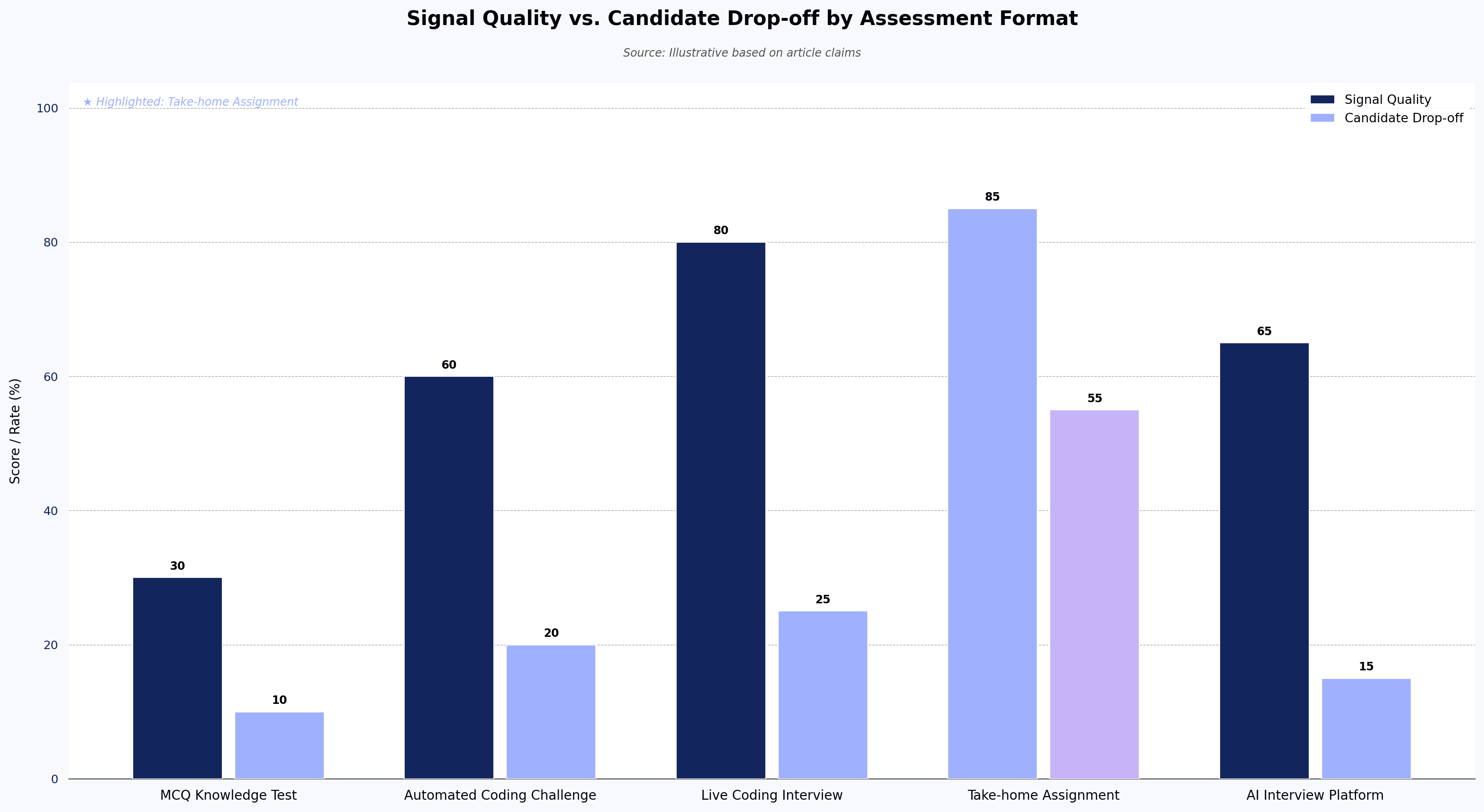
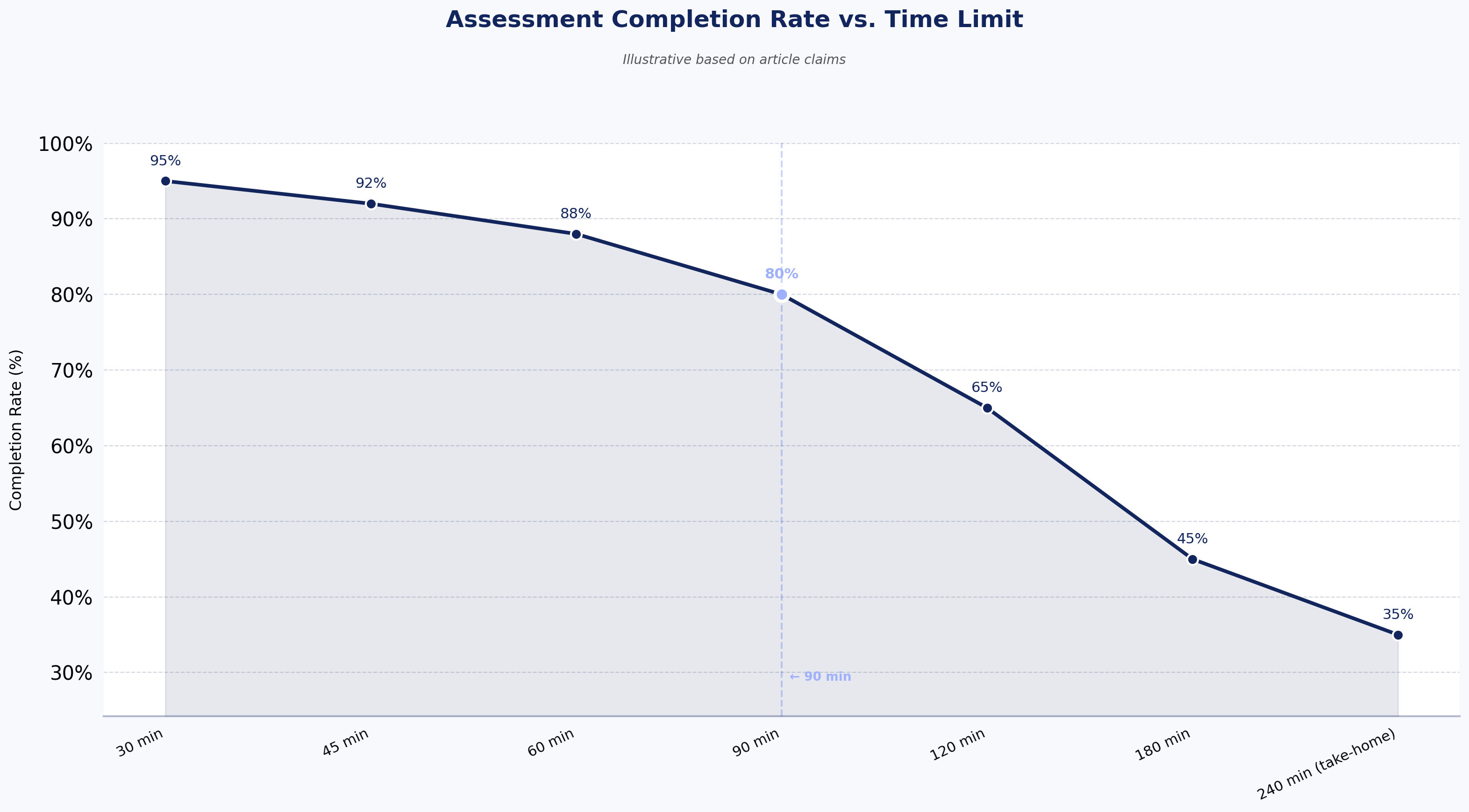
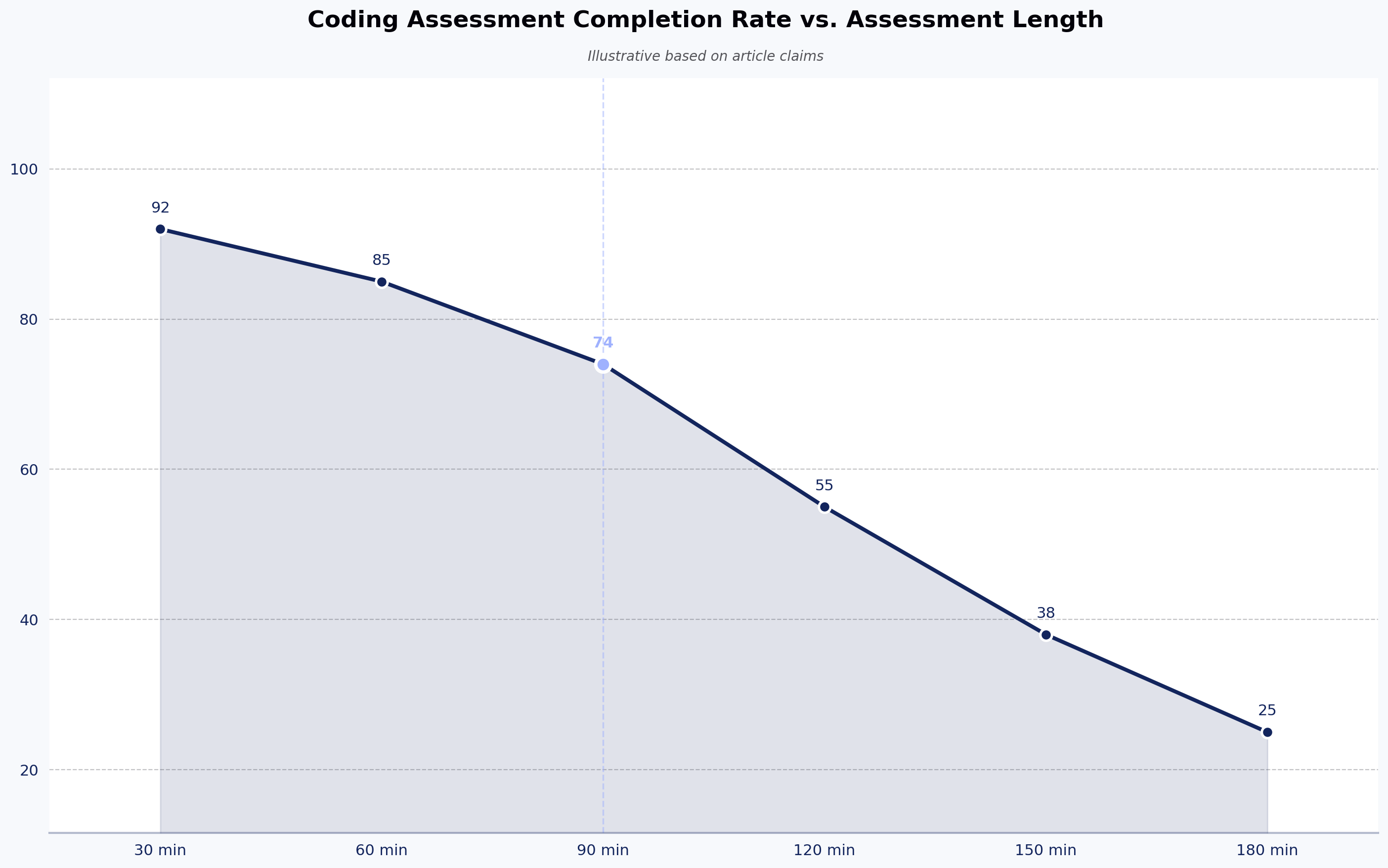
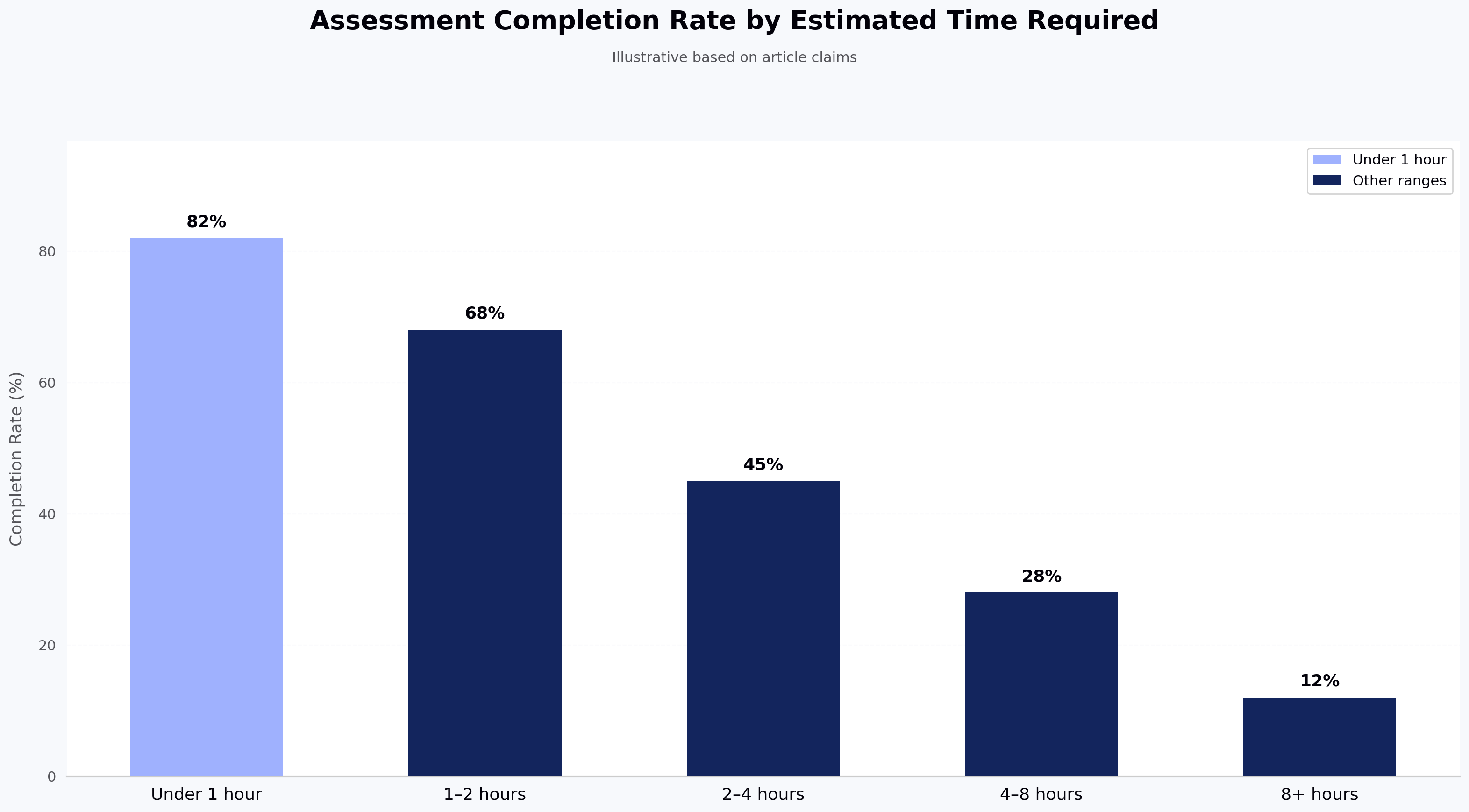
Tech hiring is already a long process. However, before you send in another tech assessment that requires days to complete, ask yourself if that's really necessary. The longer a take-home assessment requires to finish, the less likely it is that the candidate will complete it. Assume that candidates interested in your role are also talking to other companies, many of which will require them to complete take-home projects. As such their projects will stack up, and if your candidates are also working full-time jobs, they simply won't have enough time to complete long projects for free. Additionally, good engineers know how much their time is worth—asking for hours of free code is going to lead experienced engineers to drop off.
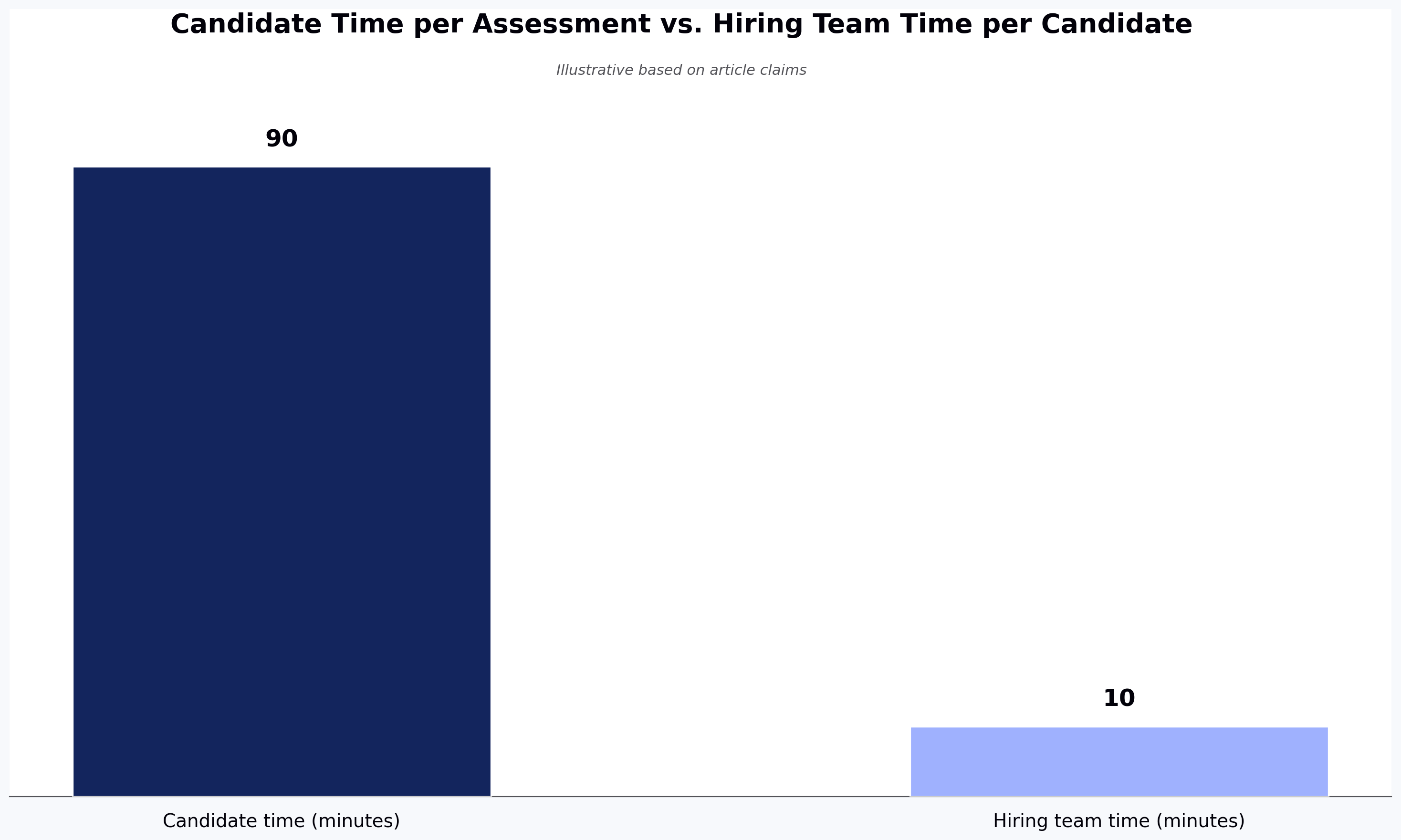
So, what can you do to reduce drop-offs? Respect your candidate's time. As a practical rule of thumb, keep take-home exercises under 2 hours of actual working time, and cap timed coding tasks at 60–90 minutes. If a certain role genuinely requires a longer take-home project then consider making it a paid project to retain interest, and to not let the developer feel like their time has been taken for granted. For more on this, see how to improve candidate experience using developer assessments.
2. Take-home assessments + onsite = too many expectations
Many companies combine take-home assessments with an onsite test as well. For engineering candidates, this can turn out to be a severely demoralizing experience. Imagine spending hours on a take-home to showcase their best efforts, only to be called into an onsite interview where the manager clearly has no clue about your skills because they never looked at your submission. Recruiters today cannot expect candidates to be available on demand. If a take-home needs to be coupled with an onsite assessment, then begin by clearly defining these expectations during the initial screening round. If an engineer is walking through your office doors (virtual or otherwise) for an onsite project, they respect the time they put into the project.
How can you make the onsite experience better for your candidates? First up, understand if your candidate is ready for this. Since 2020, more candidates have taken on caregiving responsibilities for their families, and not every candidate can dedicate extra time for both a take-home and an onsite test. If they do agree to an onsite, use the opportunity wisely to see how they integrate with the team.
Talk through their code-writing process with them, understand their decision-making process, and become privy to how they think about software.
3. Picking resumes over assessments for lateral hires
One of the biggest mistakes many recruiters and hiring managers make when selecting lateral hires is the decision to skip assessments for experienced developers. Sometimes this decision can also be taken in order to prevent any discord - experienced developers have been known to take offense at being asked to 'prove' their skill. Two engineers with the same years of experience and overlapping skill lists can still work very differently — in how they structure code, handle ambiguity, and collaborate with a team. A resume can't surface those differences; an assessment can.
So while it's true that experienced devs come with a proven skill-set, it does not automatically make them the right fit for your team. When designed to mirror the actual work, technical assessments surface team-fit differences that resumes cannot — and you should not skip them just because someone has an impressive resume. For more on this specific challenge, see how to get senior engineers to take coding assessments.
What is the secret to using technical assessments for better lateral hiring? When hiring experienced developers you are not looking at problem-solving ability, or a skill fit. Your candidate already has that. What you need to check from a hiring perspective, is what it would be like if the candidate worked on your production code in real time. The closer the prospect's project is to the real work you and your team does, the better the signal that they are the right choice for your team.
4. Using manual reviews without proper benchmarks
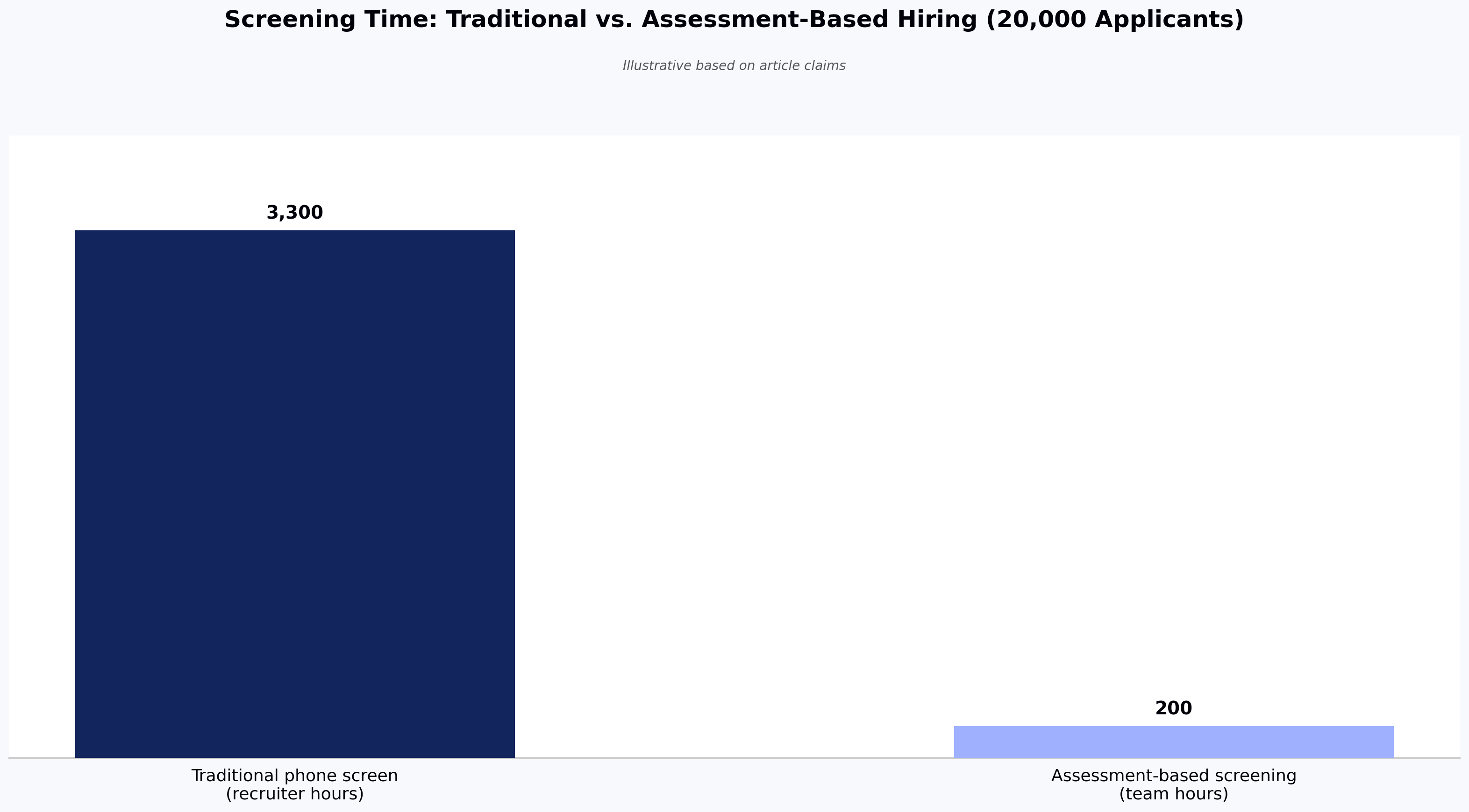
In-demand engineers often move quickly once they enter the market, sometimes accepting offers within a couple of weeks. There is a very small window to attract in-demand engineers, and the margin for slow review cycles is narrow. Consider a typical scenario. You spend two days talking to and screening candidates. Then you send across a 2-day project to a candidate. On submission, you can email it across to your hiring manager for review. The manual review takes another two days. By this time, a week has already passed and you just have 3 days to schedule interviews, and make an offer. A competing company using automated assessments returns scored results within hours instead of days, and moves to interviews while your candidate is still waiting on manual review.
Delays at the review stage are a common reason strong candidates drop out of the funnel before an offer can be made.

Automated scoring applies the same rubric to every submission, so evaluation doesn't vary with reviewer mood, fatigue, or availability. A practical benchmark: aim for scored results within 24 hours of submission, and a recruiter follow-up the same or next business day. Every developer is assessed against the same standardized benchmarks. Applying the same rubric automatically to every submission helps reduce the reviewer inconsistency that can let strong candidates slip through the funnel.
5. Using generic tests that don't match the role
Off-the-shelf aptitude tests and generic coding challenges are quick to send, but they produce weak signal for role-specific hiring. A backend engineer working on distributed systems and a frontend engineer building React interfaces will both pass a generic algorithms test — and neither result tells you whether they can do the job. Worse, generic tests tell candidates the hiring team hasn't thought carefully about what the role needs.
Assessments work best when they are built from the actual stack, tasks, and problem types the role requires. A few concrete swaps:
- Instead of a timed algorithms quiz for a backend role, use a debugging task on a realistic API with a broken authentication flow or a rate-limit bug.
- Instead of a generic SQL screen for a data role, use a data-modeling and query task built on a schema that mirrors your production tables.
- Instead of a general frontend quiz, use a live component-building task in a sandbox running the team's actual framework — React, Vue, or otherwise.
- Instead of a whiteboard system-design prompt, scope the design task to the specific service the candidate would own in their first 90 days.
The pattern in each case is the same: shorter, sharper, and drawn from work the team actually does.
6. Not aligning the assessment to the job description
If the JD lists skills the assessment doesn't test — or the assessment tests skills the JD never mentions — the funnel loses predictive validity. Candidates who match the JD get filtered out on unrelated tasks, and candidates who pass the test may not actually match what the role requires.
The fix is a simple mapping exercise. Before sending a test, list every requirement in the JD in one column and the specific assessment task that covers it in the other. If the JD calls for concurrency experience, one task tests concurrency. If the JD calls for system design at scale, one task tests that. Any test task that doesn't map to a JD line is a candidate for removal; any JD line without a matching task is either untested or absent from the JD in error.
This mapping exercise also surfaces mismatches earlier: sometimes the JD itself is outdated, and the exercise forces hiring managers to be clear about what the role actually needs. For broader context on this, see the A-Zs of tech recruiting.
FAQs on tech hiring assessments
What is the 70/30 rule in hiring?
The 70/30 rule has two common interpretations. The more widely cited version says a candidate should meet roughly 70% of the listed job requirements, with the remaining 30% developed on the job. A second interpretation, used in skills-based hiring discussions, weights hiring decisions about 70% on skills and competency evidence and 30% on culture and team-fit signals. In either framing, assessments serve the skills side of the equation — they exist to generate reliable evidence about what a candidate can actually do.
Can you still get hired if you fail a technical assessment?
Yes, in many cases. Employers evaluate assessments as one signal among several, and a weak score on one exercise doesn't automatically disqualify a candidate when interview performance, portfolio work, or references are strong. Context matters, and so does the design of the test itself.
What is the biggest red flag in technical interviews?
For candidates, the clearest red flag is an interviewer who hasn't read your submission or can't describe the team's actual work. If a hiring manager asks generic questions unrelated to the take-home you completed, or can't explain what you'd own in the first 90 days, the process is likely disorganized — and that usually reflects how the team runs day-to-day. A second red flag is vague or shifting role expectations between the recruiter screen and the technical round.
What are the most common tech hiring mistakes?
The most common tech hiring mistakes include:
- Slow feedback loops — multi-day gaps between assessment submission and reviewer response, which lose candidates to faster-moving competitors.
- Unclear role expectations — screening calls that don't specify the stack, seniority, or day-to-day tasks, leading candidates to self-select incorrectly.
- Redundant interview loops — three or four rounds that all test the same coding skill instead of covering system design, debugging, and collaboration.
- Resume-only lateral hiring — skipping assessments for senior candidates and discovering team-fit gaps only after the offer.
- Generic, off-the-shelf tests — using the same algorithms quiz for a backend distributed-systems role and a frontend React role.
Assessment mistakes matter, but they compound when the wider hiring process is also slow or misaligned.
See it in action
If you're rethinking how your team runs tech hiring assessments, request a demo of HackerEarth Assessments. It applies the same automated rubric to every submission — the fix for the manual-review delays described in Mistake #4 — and evaluates 1,000+ skills across 40+ programming languages so tests can be scoped to the actual work of the role. Request a demo.