Top 8 sourcing tools for recruiters in 2026: a practical buyer's guide
Read time: 9 minutes
Meta title: Top 8 sourcing tools for recruiters in 2026
Meta description: Compare the top sourcing tools for recruiters in 2026 — LinkedIn Recruiter, hireEZ, Gem, SeekOut, Fetcher, and more. Pricing, pros, cons, and which to pick.
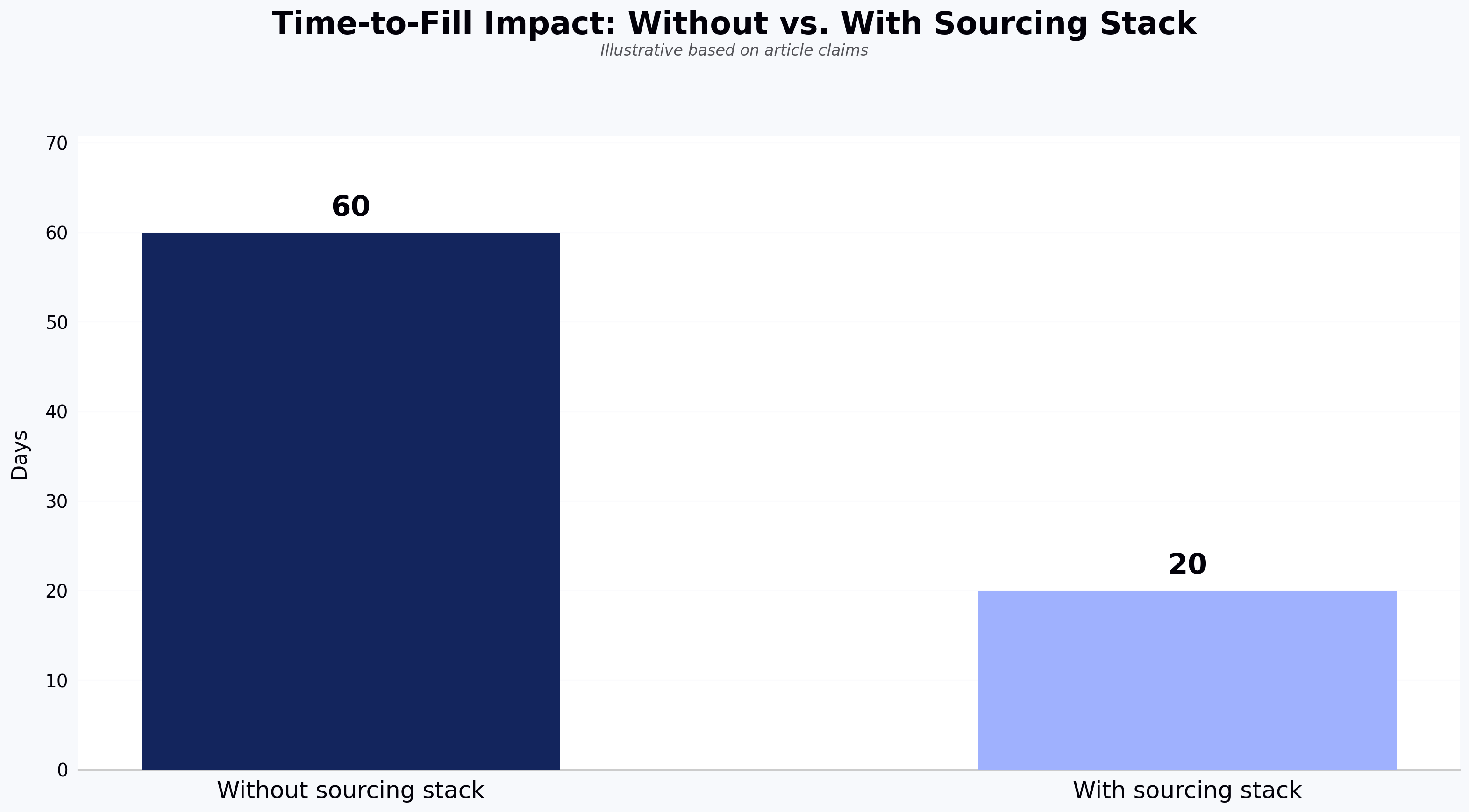
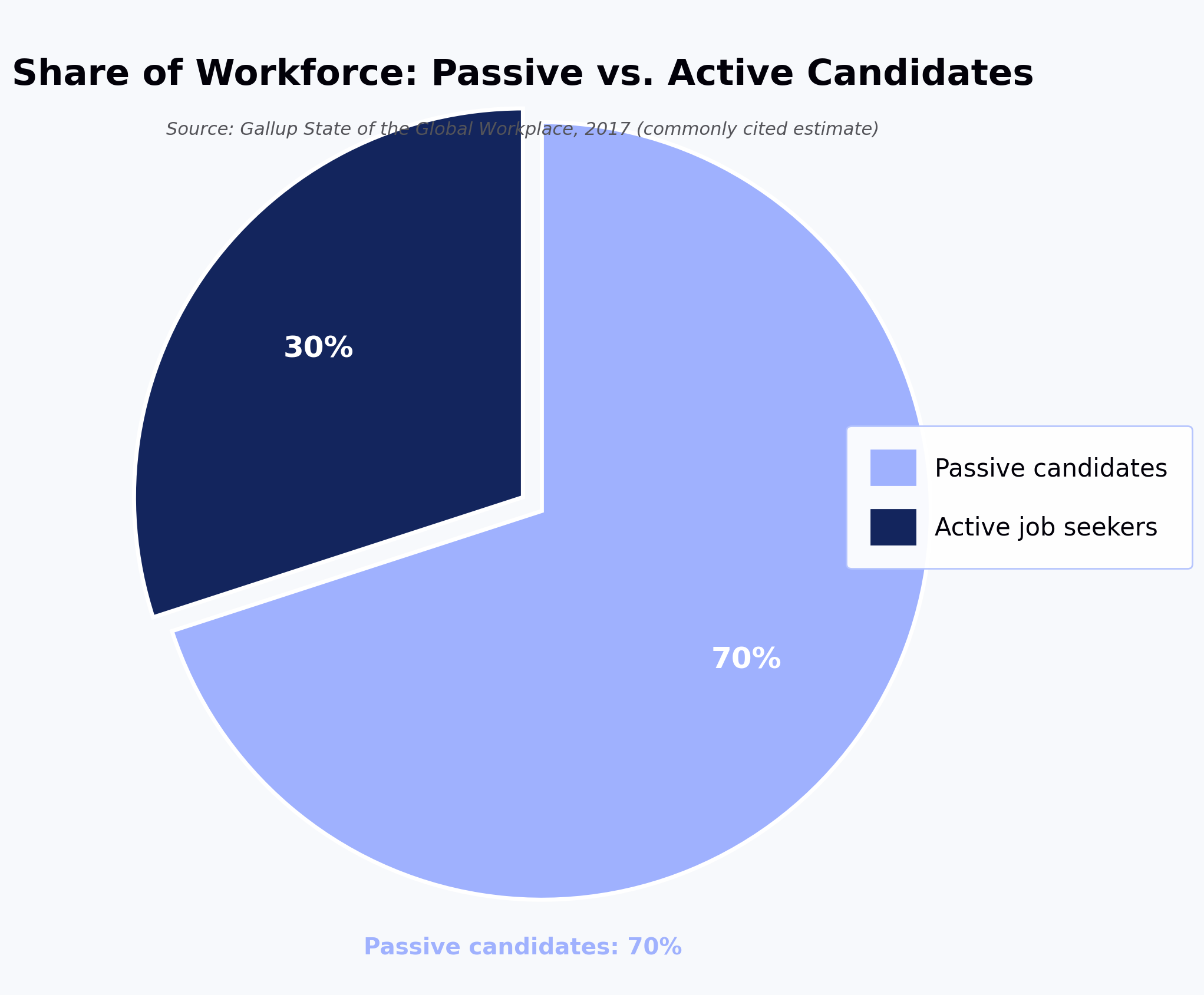
The best sourcing tools for recruiters are software platforms that help you proactively identify, evaluate, and engage passive candidates — a group widely estimated to make up around 70% of the global workforce (a figure originally from Gallup's 2017 State of the Global Workplace report and still commonly cited, though not recently re-verified). If you're a recruiter or TA lead trying to shorten TTF without drowning in LinkedIn tabs, the right sourcing stack is what separates a 60-day time-to-fill from a 20-day one. This guide walks through the tools worth considering for a 2026 recruiter's workflow, what they cost, where they fall short, and which ones to pick for which use case.
Scope note: This guide focuses on sourcing and qualification tools. Interview intelligence platforms (e.g., Metaview) are excluded because they solve the post-interview note-taking and analysis problem, not sourcing — Metaview publishes its own sourcing list, but its core product is an interview intelligence tool. Full ATS suites and ATS-first platforms are also out of scope: Manatal is primarily an ATS with sourcing as a secondary feature, and Humanly is a conversational screening and scheduling tool rather than a sourcing platform. General-purpose CRMs (e.g., Beamery, Paradox, Loxo) warrant their own comparison. Data-enrichment tools frequently recommended by working sourcers (Cognism, Clay, ZoomInfo, Crustdata) are covered in a dedicated section below rather than in the main list, because they are enrichment layers rather than search-first platforms.
What recruiters actually recommend on Reddit
Community discussions in r/recruiting and similar forums consistently surface a different tool set than the one vendors push. If you go looking outside LinkedIn Recruiter, the tools most frequently recommended by working sourcers include:
- Cognism — B2B contact data with strong European coverage and GDPR-compliant workflows.
- Clay — flexible data-enrichment platform many sourcers use to build custom lists.
- Crustdata — company and people data API popular with technical sourcers.
- Proxycurl — LinkedIn data via API for teams building custom sourcing workflows.
- ZoomInfo — enterprise B2B contact database, strongest in North America.
These tools skew toward data and enrichment rather than search UI. They're worth a look if you're an experienced sourcer building bespoke workflows rather than using an off-the-shelf platform.
How we evaluated the best sourcing tools for recruiters
Before diving into specific tools, here are the criteria that matter most when evaluating sourcing solutions:
- Functionality: Does the tool offer features that align with your sourcing needs — candidate search, social media integration, skills assessments, outreach automation?
- User experience: Is the tool intuitive enough for a sourcer to onboard within a week?
- Integration capabilities: Can the tool integrate with your existing ATS and other HR platforms?
- Cost: Does the tool's pricing match your hiring volume and slate size, given that sourcing tools range from free plans to $10,000+ per seat annually?
The best sourcing tools for recruiters in 2026
Below are the tools worth considering, grouped by what they're actually good at. Pricing figures reflect publicly listed or commonly reported ranges as of 2026 and should be confirmed with each vendor before budgeting.
1. LinkedIn Recruiter
LinkedIn Recruiter is a premium service offered by LinkedIn, the largest professional networking platform.
Key features
- Advanced search filters: Target candidates based on skills, experience, location, and current company.
- InMail messaging: Send direct messages to candidates outside your network.
- Talent Insights: Benchmark hiring markets and competitor talent flows.
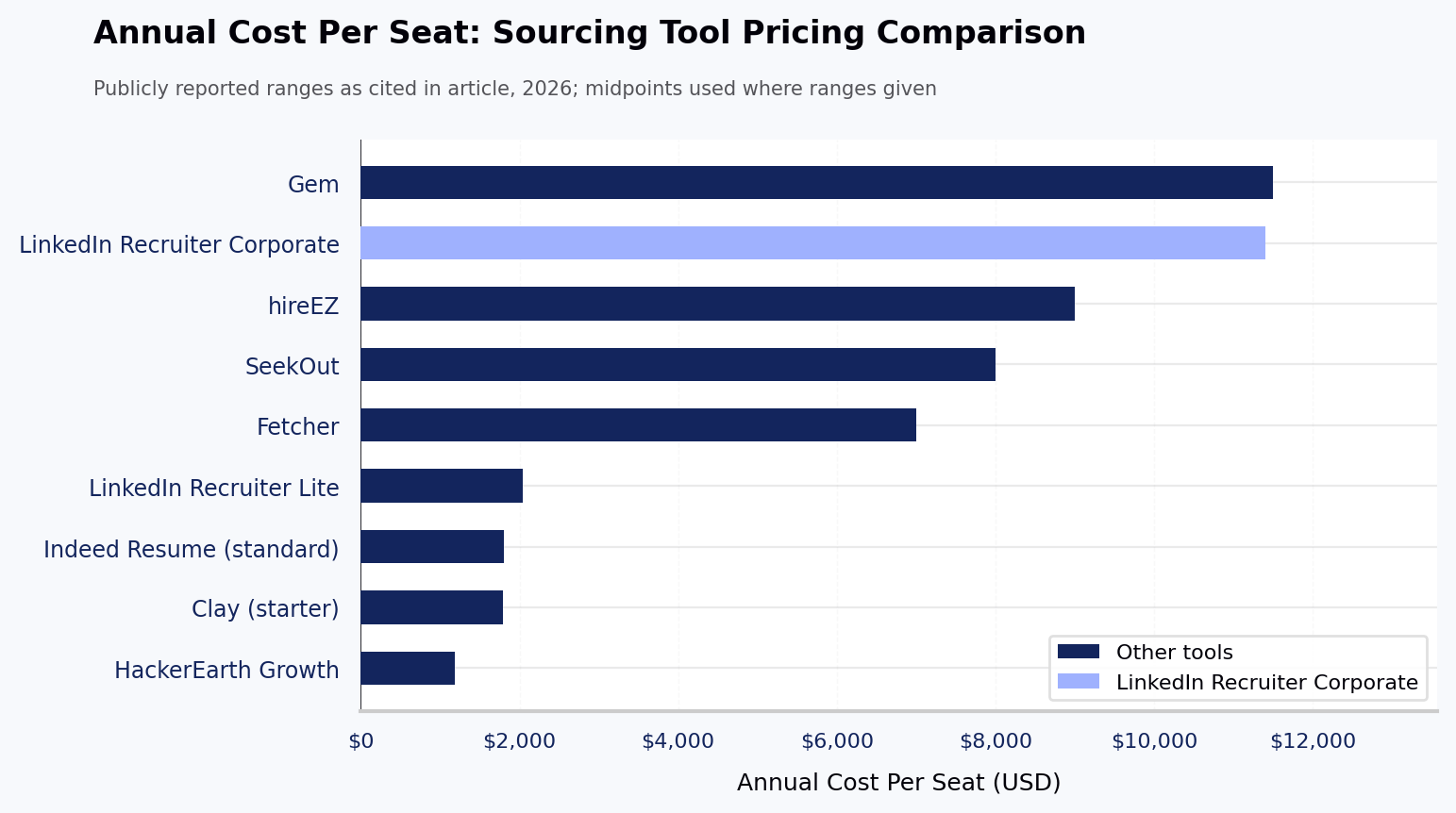
Pricing (as reported; confirm with vendor): LinkedIn Recruiter Corporate is commonly reported in the range of ~$10,800–$12,000 per seat per year; Recruiter Lite is typically ~$170/month. Confirm with LinkedIn Sales for current rates.
Pros: Unmatched network reach — the largest professional dataset available. Rich, current profile data because candidates maintain their own profiles.
Cons: Expensive on a per-seat basis, InMail response rates have declined as candidates receive more messages, and Boolean search is limited compared to specialist sourcing tools like hireEZ or SeekOut.
Verdict: A default choice for most in-house recruiting teams hiring professional roles. If you can only afford one tool, this is usually it — pair it with a cheaper enrichment tool to close its contact-data gaps.
2. Indeed Resume Search
Indeed Resume Search lets you search through resumes uploaded to Indeed.com.
Key features
- Large resume database: Access to a wide pool of job seekers, particularly strong for high-volume, hourly, and mid-market reqs.
- Contact options: Message candidates directly through the platform.
Pricing (as reported; confirm with vendor): Indeed Resume is typically sold as a subscription (~$100–$250 per month for standard plans) or pay-per-contact. Enterprise pricing varies.
Pros: Strong for hourly, operations, and volume hiring where LinkedIn coverage thins out. Simpler search interface than LinkedIn Recruiter.
Cons: Resumes are often outdated, and many candidates listed are actively job-seeking (not the passive talent sourcing tools are supposed to unlock). Contact data quality is inconsistent.
Verdict: A useful secondary tool for high-volume or non-professional roles. Not a replacement for LinkedIn Recruiter for skilled professional hiring.
3. hireEZ (formerly Hiretual)
hireEZ (rebranded from Hiretual in 2022) is an AI-powered outbound recruiting platform that aggregates candidate data from across the open web.
Key features
- AI sourcing: Per vendor-reported figures, hireEZ searches 800M+ profiles across 45+ platforms including GitHub, Stack Overflow, LinkedIn, and personal sites.
- Contact finder: Surfaces personal emails and phone numbers for outreach.
- Sequencing: Automated multi-touch email campaigns with performance tracking.
- Diversity filters: Search by underrepresented group signals to broaden pipelines.
Pricing (as reported; confirm with vendor): hireEZ typically starts around $8,000–$10,000 per seat per year for standard plans, with enterprise tiers higher.
Pros: Deep aggregated data across the web — especially strong for technical, healthcare, and hard-to-fill roles. Contact-finding accuracy is generally reported as higher than most peers.
Cons: Steep price tag for small teams. Email deliverability depends heavily on your domain warm-up practices.
Verdict: Worth considering for teams that run outbound sourcing as a primary channel and need to reach beyond LinkedIn. Overkill if 80% of your pipeline is inbound.
4. Gem
Gem is a talent CRM and outbound sourcing platform popular with in-house recruiting teams at growth-stage companies.
Key features
- LinkedIn extension: Adds contact data and sequencing directly to LinkedIn profiles.
- Talent CRM: Tracks every candidate touchpoint across recruiters and over time.
- Analytics: Pipeline conversion metrics, DEI reporting, source-of-hire attribution.
Pricing (as reported; confirm with vendor): Gem is quote-based; commonly reported starting points are ~$8,000–$15,000 per year for small teams, scaling with seat count.
Pros: Strong analytics for TA leaders who need to justify sourcing ROI. Excellent LinkedIn integration.
Cons: Not a data source itself — you still need LinkedIn Recruiter (or similar) to feed it. Full value emerges only when a team standardizes on it.
Verdict: A fit when you already have LinkedIn Recruiter and want to layer sequencing, CRM, and reporting on top.
5. SeekOut
SeekOut is a sourcing platform with deep search across engineering, healthcare, security-cleared, and diversity talent pools.
Key features
- Deep search: Advanced Boolean and power filters across an aggregated candidate database.
- Diversity and veteran filters: Explicit support for DEI-focused sourcing.
- Internal talent search: Adds an internal mobility layer on top of external sourcing.
Pricing (as reported; confirm with vendor): SeekOut is quote-based; publicly reported ranges cluster around $6,000–$10,000 per seat per year.
Pros: Very strong for technical, cleared, and healthcare hiring. Internal talent search is a differentiator for larger enterprises.
Cons: Learning curve is real — the power-user features take weeks to master. Third-party skill signals should be treated as leads to validate, not verified skill data.
Verdict: Suits enterprise teams hiring niche technical roles, especially where diversity or clearance is a filter.
6. Findem
Findem is an AI talent acquisition platform that builds candidate profiles from hundreds of data attributes ("3D profiles") rather than resume keywords.
Key features
- Attribute-based search: Search on career trajectory, company stage experience, tenure, and other signals beyond keywords.
- AI copilot: Natural-language search prompts instead of Boolean strings.
- Market intelligence: Talent supply and competitor benchmarking.
Pricing (as reported; confirm with vendor): Findem is quote-based enterprise pricing; expect five-figure annual commitments.
Pros: Strong for executive and hard-to-define roles where "we'll know it when we see it" is the actual search brief.
Cons: Enterprise pricing and complexity — not a fit for small teams.
Verdict: Fits executive search and complex profile matching at enterprise scale.
7. Fetcher
Fetcher is an AI sourcing tool built around a managed-service model: you describe the role, Fetcher's AI (with human review) delivers vetted candidates into an email sequence.
Key features
- Managed sourcing: AI + human curation delivers batches of candidates weekly.
- Automated outreach: Built-in sequencing and reply detection.
- ATS integrations: Push engaged candidates directly to your ATS.
Pricing (as reported; confirm with vendor): Fetcher typically starts around $6,000–$8,000 per year for small teams; enterprise pricing scales up.
Pros: Lightweight — a reasonable fit for lean teams that don't want to run search themselves.
Cons: You give up some control over sourcing logic. Not the right fit if you need deep Boolean control.
Verdict: Fits small talent teams (1–5 recruiters) that need pipeline volume without hiring a dedicated sourcer.
A note on qualification: HackerEarth
HackerEarth doesn't belong on the sourcing list above — it isn't a candidate-database tool, and you'll still need LinkedIn Recruiter or hireEZ to source names. It's included here as a complementary qualification layer that sits after sourcing: the step where you decide whether the candidates you found can actually do the job.
HackerEarth is a technical hiring platform used by recruiters and engineering leaders to screen and interview developers with objective evidence of skill rather than resume claims. Its core capabilities include a library of skill assessments spanning 1,000+ skills across coding, DevOps, data science, and non-technical roles (sales, customer support, finance); FaceCode, a live coding interview environment with a code editor and auto-evaluation as the candidate writes; and OnScreen, an AI-driven interview product (launched April 2026) that conducts and evaluates candidate interviews at scale.
OnScreen's AI is trained on HackerEarth's historical assessment and interview data to apply a consistent rubric across candidates for the same role, with KYC-grade identity verification and built-in proctoring. Its limits are worth noting: rubric consistency depends on the role type having sufficient prior data, and the AI is best suited to structured technical screens rather than open-ended judgment or executive-level interviews. For roles outside HackerEarth's core coverage (e.g., senior leadership, deeply specialized domains), human interviewers remain the right call.
Pricing (as reported; confirm with vendor): HackerEarth Skill Assessments offers defined tiers — Growth at $99/month, Scale at $399/month, and Enterprise (custom). Pricing for other products (FaceCode, OnScreen, Hiring Challenges) is quote-based. Pilot access to OnScreen is currently available at hackerearth.com/ai/onscreen.
For more on how a qualification layer fits into a modern pipeline, see our guide to skills-based hiring.
Best AI sourcing tools for recruiters
AI sourcing tools use machine learning to search, rank, and reach out to candidates at a scale that manual sourcing can't match. The main players in 2026:
- hireEZ — deep web aggregation, suits outbound-heavy teams.
- Findem — attribute-based AI matching, strong for executive and complex roles.
- Fetcher — managed AI sourcing for lean teams.
- Gem — AI-assisted sequencing and CRM on top of LinkedIn.
If you're evaluating AI sourcing tools specifically, start by asking whether your bottleneck is finding candidates (hireEZ, Findem) or engaging them (Gem, Fetcher). AI screening tools like HackerEarth OnScreen solve a separate problem — qualifying the candidates once found — and shouldn't be compared apples-to-apples with sourcing platforms.
Best free sourcing tools for recruiters
Not every team has $10K per seat to spend. These free or freemium tools can carry a small recruiting operation surprisingly far:
- LinkedIn (free version): Basic search and messaging within your network. Free commercial search is throttled, though LinkedIn does not publicly disclose the exact threshold; the commonly cited estimate is around 100 profile searches/month before commercial-use limits kick in. Combined with Boolean X-ray searches on Google, it covers a lot of ground.
- Google X-ray search: Free Boolean searches across LinkedIn, GitHub, and other public sites (e.g.,
site:linkedin.com/in "backend engineer" "Berlin"). - GitHub search: Free for finding developers by language, contributions, and location.
- Indeed (free posting tier): Free job posts to attract inbound applications.
- AngelList / Wellfound: Free tier for startup-focused hiring.
- Hunter.io (free tier): Approximately 25 free email lookups per month per account (as of publication; confirm with Hunter.io).
Free tools have obvious ceilings — no automation, no aggregated contact data, no analytics — but they're often enough for early-stage teams making fewer than 20 hires a year.
Comparing the best sourcing tools for recruiters
| Tool | Best for | Starting price (approx.) | Free tier |
|---|---|---|---|
| LinkedIn Recruiter | Broad professional hiring | ~$170/mo (Lite) / ~$10.8K/yr (Corporate) | No (free LinkedIn separate) |
| Indeed Resume | Volume & hourly hiring | ~$100–$250/mo | Limited |
| hireEZ | Outbound sourcing across the open web | ~$8K–$10K/yr | Trial only |
| Gem | Talent CRM + sequencing | ~$8K–$15K/yr | Free Chrome extension (limited) |
| SeekOut | Technical, cleared, DEI sourcing | ~$6K–$10K/yr | Trial only |
| Findem | Executive & attribute-based search | Enterprise quote | No |
| Fetcher | Lean teams needing managed pipeline | ~$6K–$8K/yr | Trial only |
| Cognism | B2B contact data (EU-strong) | Enterprise quote | Trial only |
| Clay | Custom data enrichment workflows | ~$149/mo (starter) | Free tier available |
| ZoomInfo | Enterprise B2B contact database (US) | Enterprise quote | Trial only |
| Crustdata | People/company data API | API-based | Trial only |
| HackerEarth (qualification, not sourcing) | Technical assessment & AI screening | $99/mo (Skill Assessments Growth) | Pilot access to OnScreen |
Prices are indicative and drawn from publicly reported ranges as of 2026 — confirm directly with each vendor before budgeting.
Which sourcing tool should you actually pick?
- If you're a solo recruiter or a startup team: LinkedIn Recruiter Lite + free X-ray searches, plus an assessment tool for technical screens once volume picks up. Skip everything else until hiring volume justifies it.
- If you're a growth-stage in-house team hiring 20+ per quarter: LinkedIn Recruiter Corporate + Gem for sequencing/CRM + an assessment platform for technical roles.
- If you're outbound-heavy or hiring hard-to-find profiles: hireEZ or SeekOut on top of LinkedIn Recruiter.
- If technical hiring is your primary bottleneck: Pair LinkedIn Recruiter or hireEZ for top-of-funnel with a qualification layer like HackerEarth Skill Assessments.
- If you're enterprise with complex or executive hiring: Findem + SeekOut + Gem is the common stack.
There is no single "best" sourcing tool — but there is a wrong one for your situation. The most common mistake is buying hireEZ or SeekOut before the team is actually running outbound campaigns; the licenses sit unused for a year.
Conclusion
Sourcing tools only pay back when they match how your team actually hires. A 200-person company running mostly inbound doesn't need a $10K-per-seat AI sourcing platform. A team hiring 30 engineers a year without any objective skill signal is losing more money to bad hires than any sourcing license would cost.
For most recruiting teams in 2026, a reasonable stack is LinkedIn Recruiter for reach, a sequencing/CRM layer like Gem for workflow, and — if technical hiring is a bottleneck — an assessment layer like HackerEarth to qualify candidates before they reach a hiring manager. You can schedule a demo or request pilot access to OnScreen if that fits your situation. Add hireEZ, SeekOut, Findem, or Fetcher only when a specific gap in your funnel justifies the spend.
FAQs
What are the best free sourcing tools for recruiters?
Free LinkedIn combined with Google X-ray searches, GitHub search for developers, Indeed's free posting tier, and Wellfound (formerly AngelList Talent) for startup hiring cover most needs for small teams. Hunter.io's free tier gives approximately 25 email lookups per month, and free LinkedIn commercial search is throttled — LinkedIn does not publish the exact number, but community estimates put it around 100 profile views before the commercial-use limit kicks in.
How should you evaluate an AI sourcing tool's claims?
Vendors describe most sourcing platforms as "AI-powered," but the label covers very different things. Before buying, ask three questions: (1) What is the AI actually doing — ranking existing profiles, finding new profiles, or writing outreach? (2) What data was it trained on, and does that data match the roles you hire for? (3) What's the fallback when the AI is wrong — is there human review, or are you shipping AI-ranked lists straight to hiring managers? A related trade-off worth naming: AI applied at the sourcing layer (hireEZ, Findem, Fetcher) helps you find more candidates faster, but AI applied at the screening layer (structured assessments, AI-scored interviews) is often where the bigger time savings sit, because it removes the manual review step that clogs most technical pipelines. Which layer to invest in depends on whether your bottleneck is volume or qualification.
Which sourcing tool offers the best value for small businesses?
For small businesses, the best value usually comes from LinkedIn Recruiter Lite (~$170/month) plus free tools like Google X-ray search and GitHub. Add a specialized tool only when hiring volume justifies the cost. For technical screens at low volume, HackerEarth's Skill Assessments Growth tier ($99/month) is a cheaper entry point than most outbound platforms.
How do sourcing tools integrate with existing ATS systems?
Most modern sourcing tools offer native integrations with major ATS platforms (Greenhouse, Lever, Workday, iCIMS, Ashby) via API. Before buying, confirm bidirectional sync — you want candidate data to flow into the ATS and status updates to flow back to the sourcing tool. Without that, teams end up doing manual data entry that erases most of the efficiency gain.
Should you buy a sourcing tool before you have an outbound motion?
Probably not. The most common wasted spend in TA budgets is a hireEZ or SeekOut license bought before the team has a repeatable outbound cadence — the seats sit idle and renewal gets awkward. Buy the tool after you've run outbound manually for a quarter and can point to volume the tool would unlock.
Are there sourcing tools recruiters actually recommend on Reddit?
Recruiters on r/recruiting frequently recommend Cognism, Clay, Crustdata, Proxycurl, and ZoomInfo as alternatives or complements to LinkedIn Recruiter, especially for teams building custom data-enrichment workflows or hiring outside the US.